
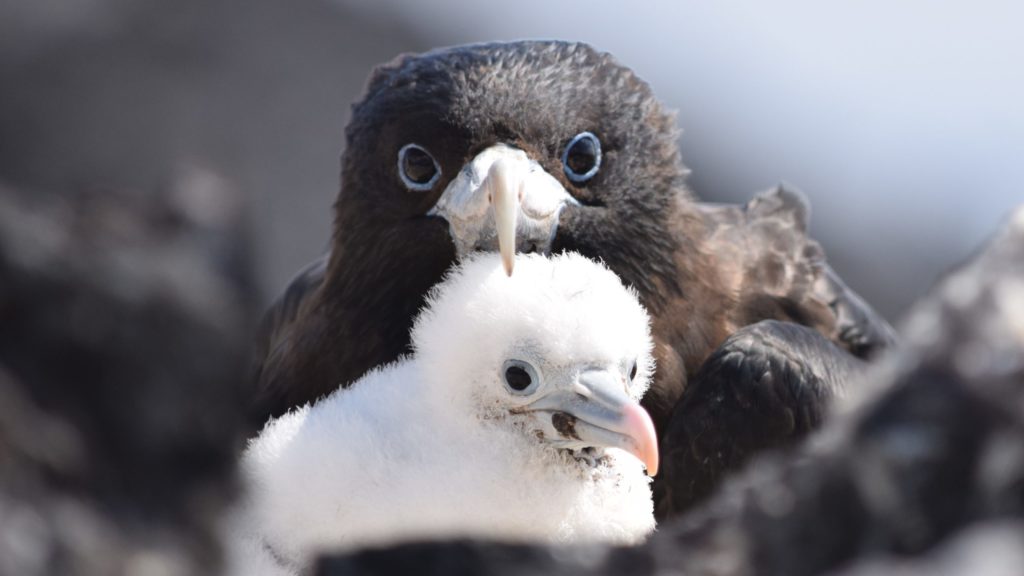
From the remote volcanic outcrop of Ascension, the first flights made by fledgling seabirds have been tracked into the vast Atlantic Ocean.
As Juvenile seabirds do not have to return to the nest to feed chicks, they generally explore further than adults. For Ascension Island’s young Masked Boobies, that means leaving the safety of the Marine Protected Area (MPA) covering the entire Exclusive Economic Zone (EEZ) where commercial fishing is not permitted. Outside the EEZ is the high seas where protection for wildlife is limited. But with the Agreement on Marine Biological Diversity of Areas beyond National Jurisdiction (High Seas Treaty) now in force, it is crucial to collect evidence of species that rely on the high seas and understand the challenges they face there.
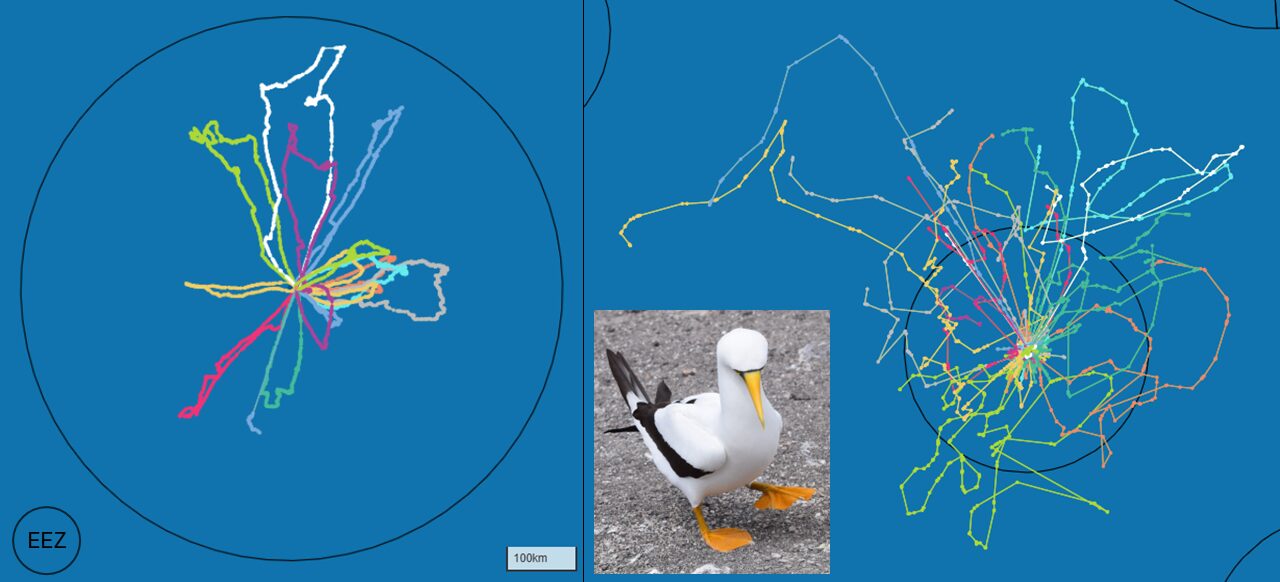
Left = tracks for breeding adult Masked Boobies from a previous study. Right = tracks for juvenile Masked Boobies from this study. Black = Exclusive Economic Zones.
Juvenile Ascension Frigatebirds travelled even further.
This study was the first to track Ascension Frigatebirds into the EEZs of St Helena and many countries in West Africa (see map below). Previous tracking efforts showed one juvenile spent time in the EEZ of Brazil, and this project also showed this pattern.
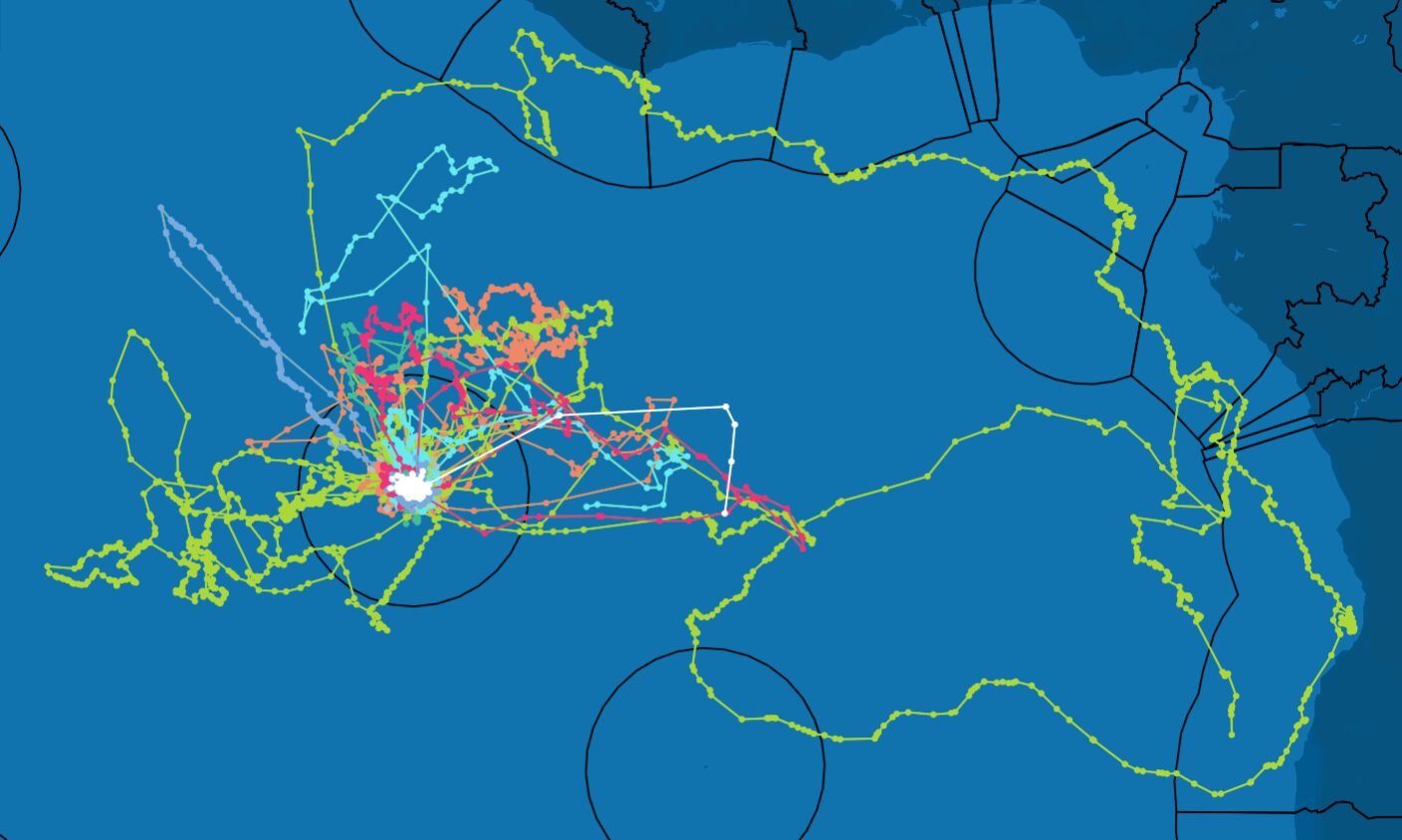
New juvenile Ascension Frigatebird tracks from 2025. Black = Exclusive Economic Zones.
Frigatebirds are highly adapted for life on the wing – they are lightweight, long-winged and incapable of landing on the water due to non-waterproof plumage. They mainly hunt flying fish and squid from the air, seizing prey driven to the surface by oceanic predators including tuna and dolphins. This means that depleted stocks of predatory fish in the tropical Atlantic could impact the ability of the endemic and Vulnerable Ascension Frigatebirds to access their food.
When they leave the MPA, Ascension’s juvenile seabird use areas of high seas fishing effort. By combining datasets on seabird movements and apparent fishing effort, we can better understand the potential ecosystem-level impacts of fishing in remote tropical oceanic habitats. Areas of overlap could also help inform strategies to target satellite surveillance for Illegal, Unreported and Unregulated fishing inside the MPA.
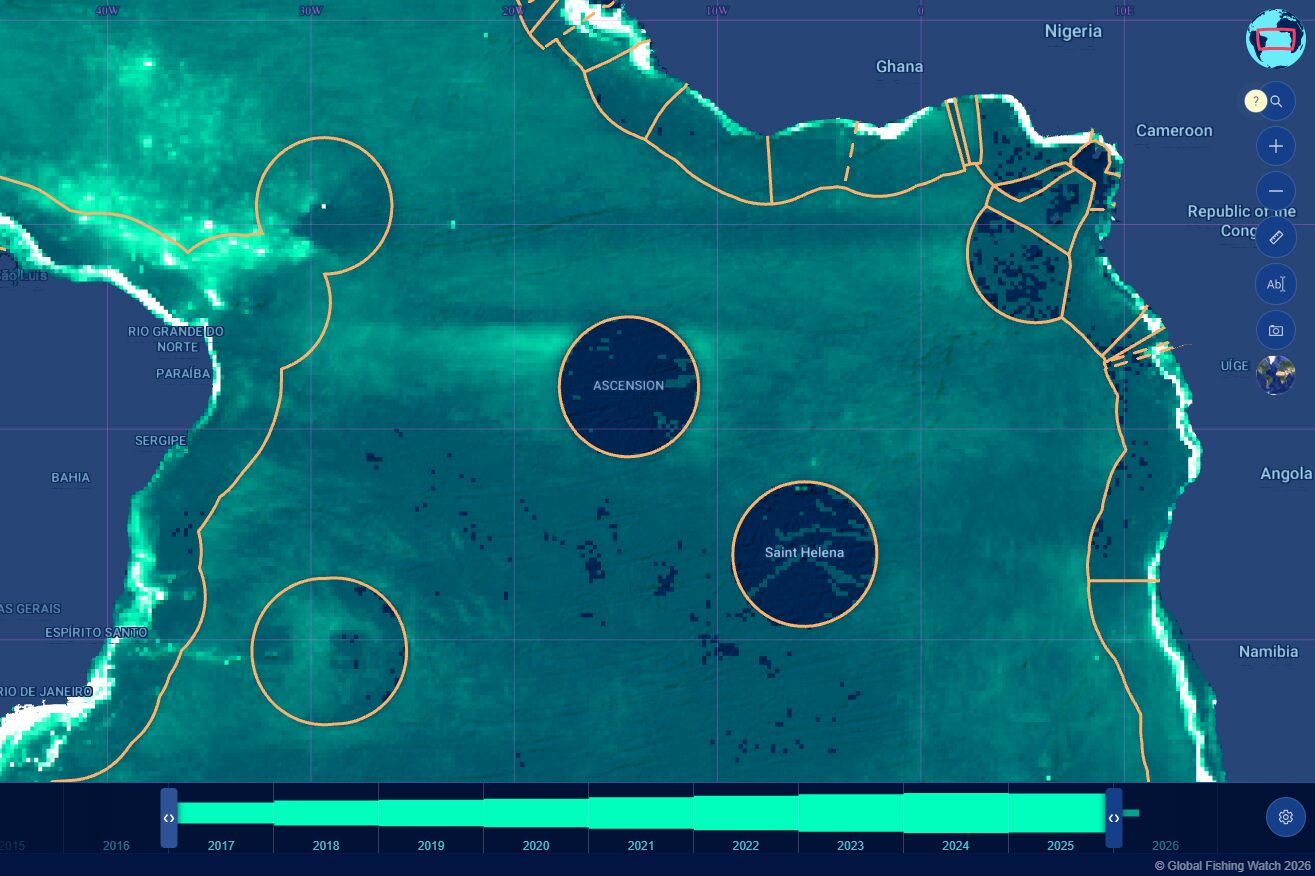
Apparent Fishing Effort from Global Fishing Watch data for the study region. Orange = Exclusive Economic Zones.
The Protecting Seabirds Across Borders project (DPLUS195) is funded by the UK Government Biodiversity Challenge Funds through Darwin Plus, and additional satellite tags were funded by the Blue Belt Programme. The project is a collaboration between Ascension Island Government, BirdLife International, Centre for Environment, Fisheries and Aquaculture Science, Global Fishing Watch and the Marine Management Organisation (MMO)