The productive waters off Namibia and South Africa support many of the world’s albatross and petrel species, as well as important fisheries. This concentration of seabirds and fishing vessels can lead to a high risk of bycatch mortality, as emphasised by a recent international assessment that identified the region as a hotspot for bycatch risk in longline fisheries for several medium-sized petrel species.
Thankfully, mitigation measures can be highly effective and practical to implement. The Albatross Task Force demonstrated that bird-scaring lines, used alongside night setting and line weighting, can reduce seabird bycatch by 98% in Namibia’s hake longline fleet. South Africa achieved similar success by implementing bird-scaring lines in the hake trawl fishery, which reduced albatross deaths by 99% and helped the fishery secure MSC certification in 2004. However, challenges remain in getting mitigation measures to be used in key fisheries, such as pelagic tuna longline fleets.
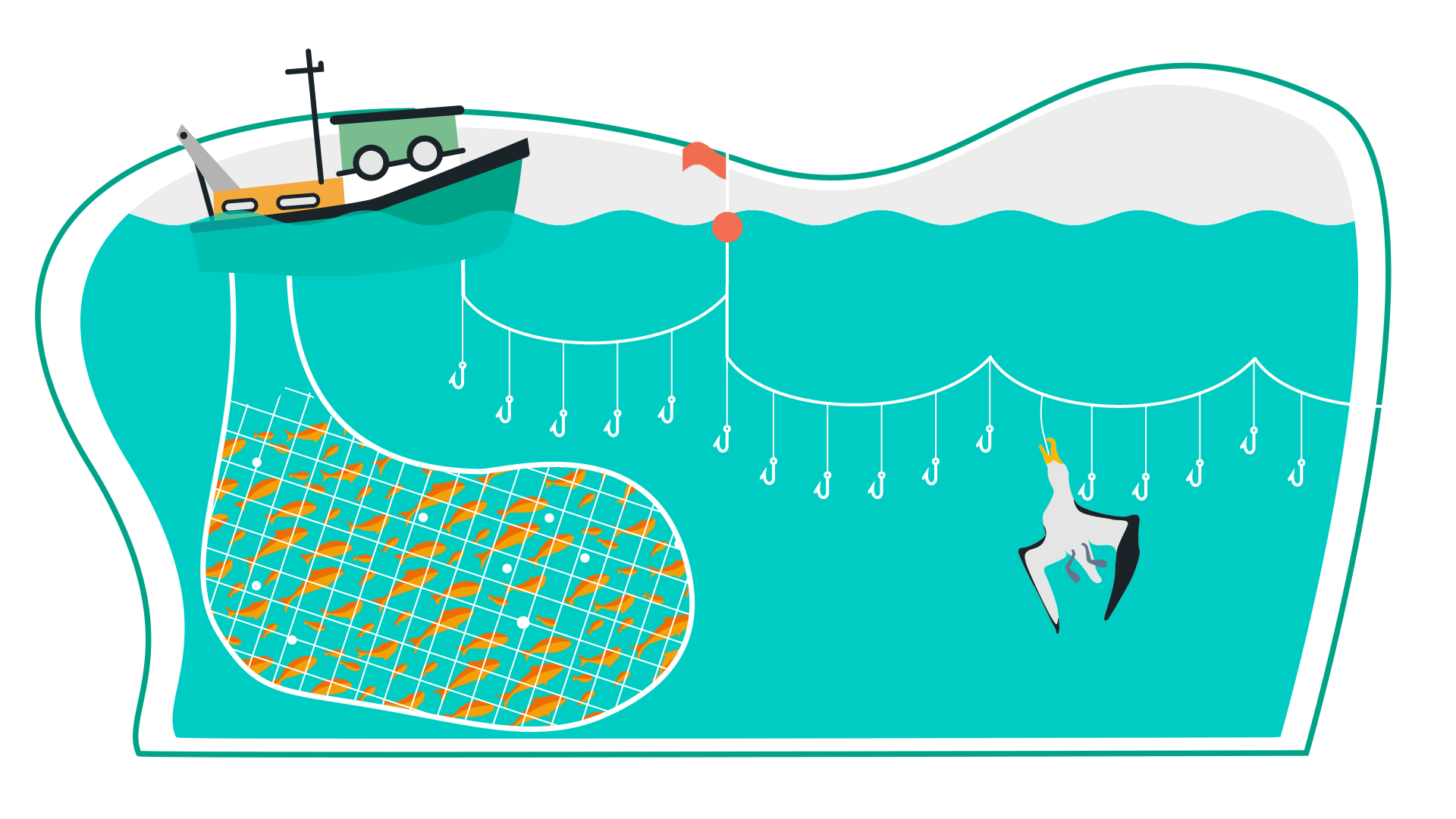
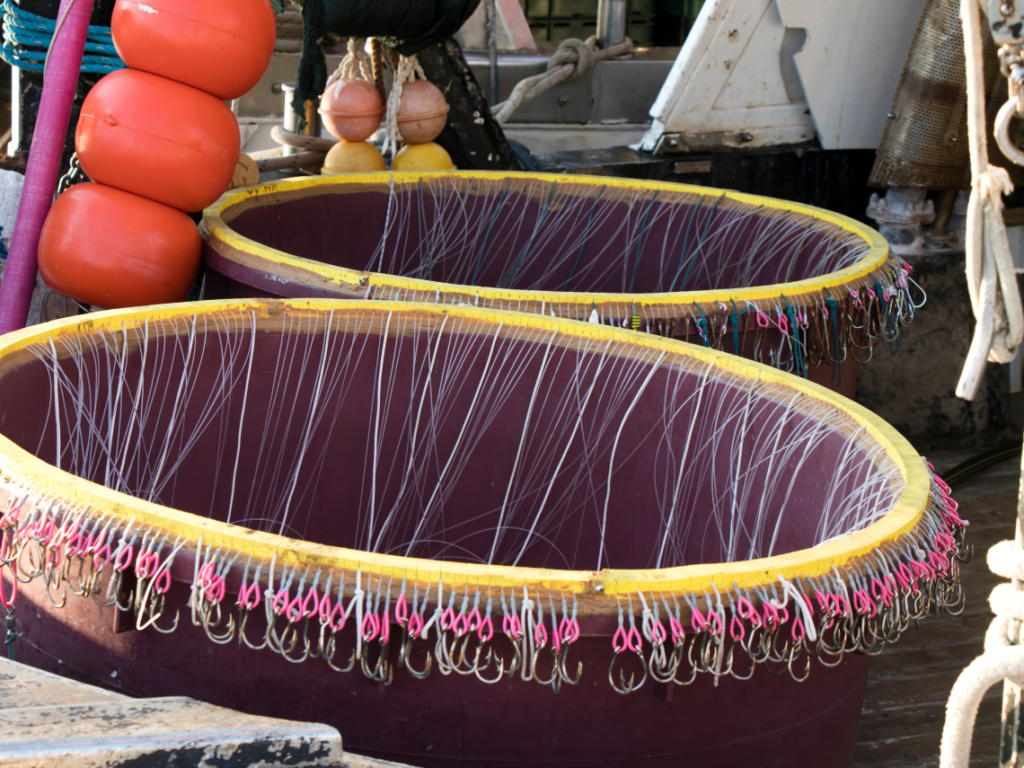
A single tuna fishing vessel can deploy a 100-kilometre longline, set with as many as 3,000 baited hooks. In any given year, more than 40% of the ocean is within 30 kilometres of one of these hooks; the distance at which a Snowy Albatross can smell its prey. With over 7,000 tuna longliners operating globally, and lines hauled and reset every day that a vessel is at sea, the threat to seabirds transcends national boundaries.
Precisely who is responsible for ensuring vessels comply with seabird-saving mitigation measures, and for collecting bycatch data, is not always clear. While technologies, including seabird tracking, can help to remotely monitor vessels, major gaps in observer coverage and reporting impede compliance.
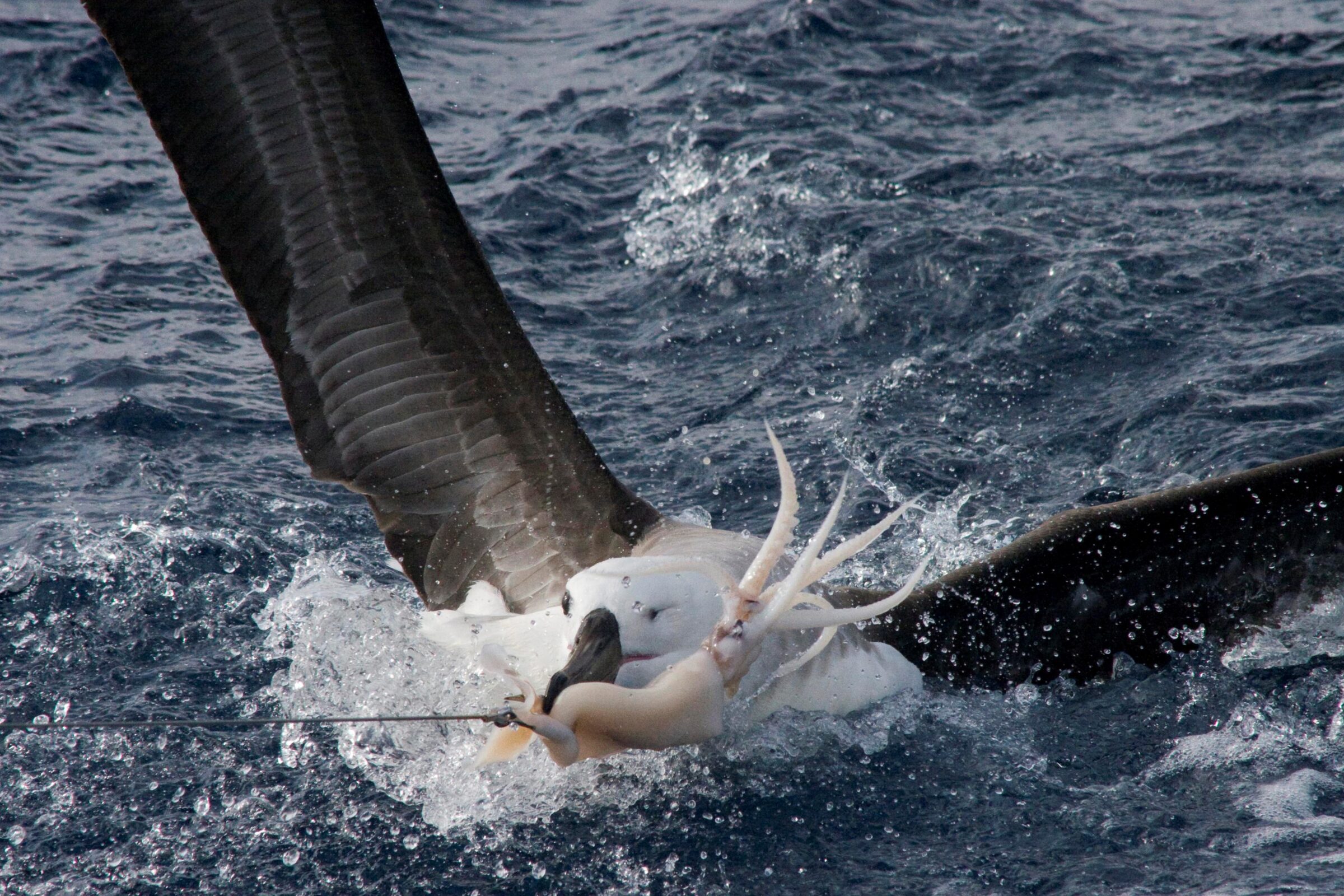
Juvenile Black-browed Albatross caught on a baited long-line hook off the coast of Brazil. Albatross Task Force instructor Fabiano Peppes released the bird. © Albatross Task Force
Without accurate data on the effectiveness of mitigation measures and the bycatch of seabirds, turtles and other marine life, it is difficult to improve safeguards for threatened species, identify Key Biodiversity Areas, and map where important feeding and breeding grounds overlap with fishing operations.
Over the past two years, a project led by the BirdLife International Marine Programme has been working across time zones to address gaps in data associated with chartering arrangements. Chartering is when one nation temporarily leases a foreign-flagged vessel, increasing its capacity to catch its fish quota without the cost of building up its own fleet. In the past five years, Namibia has chartered 60 such vessels, substantially increasing its national capacity from around half a dozen active longliners.
While under charter, the fishing activity of these vessels – often flagged to Spain, Taiwan or Japan – must be reported by the chartering nation. However, both the flag state and chartering state are responsible for enforcing conservation measures such as bird-scaring lines. This dual responsibility presents challenges for reporting, but also an opportunity to strengthen independent data collection and ultimately improve enforcement. Japanese vessels are also active in South Africa, where estimates suggest high rates of petrel bycatch. Meanwhile, our partner BirdLife South Africa are leading the way in trailling mitigation measures, engaging with fishers, and working with innovative monitoring technology.
Funded by the Paul M Angell Family Foundation, the Marine Programme has taken a holistic approach to this problem, engaging at both a policy level and through direct work with vessels in Namibia and Taiwan.
Working with Namibian authorities and our local collaborator, the Namibian Nature Foundation, the programme reviewed and provided guidance on the forms fisheries observers use to record bycatch and the application of mitigation measures. The forms were strengthened to capture crucial details of fishing operations and non-target species caught, including turtles, seabirds and sharks.
The programme supported these improvements with training exercises involving the Namibian observer agency. Over several days, more than half of the observer force, six fisheries inspectors and five fisheries biologists worked on identifying sharks, turtles and seabirds. This is particularly important because tuna longliners encounter different groups of species from the hake vessels operating in shallower waters. Species identification guides were distributed to observers to support consistent bycatch recording at sea.
The international scope of the Marine Programme also enabled engagement with crews of Taiwanese and Japanese distant-water fleets in their home ports. These vessel visits improved understanding of the conservation measures required when operating in areas with vulnerable seabirds, such as the waters off Namibia. The programme has highlighted the need for improved data collection and reporting on endangered, threatened and protected species with the International Commission for the Conservation of Atlantic Tunas (ICCAT), which is responsible for tuna fisheries in the Atlantic Ocean. This work aims to encourage ICCAT to improve the data submitted by member states and support regional assessments of tuna fleets’ impacts on vulnerable species.
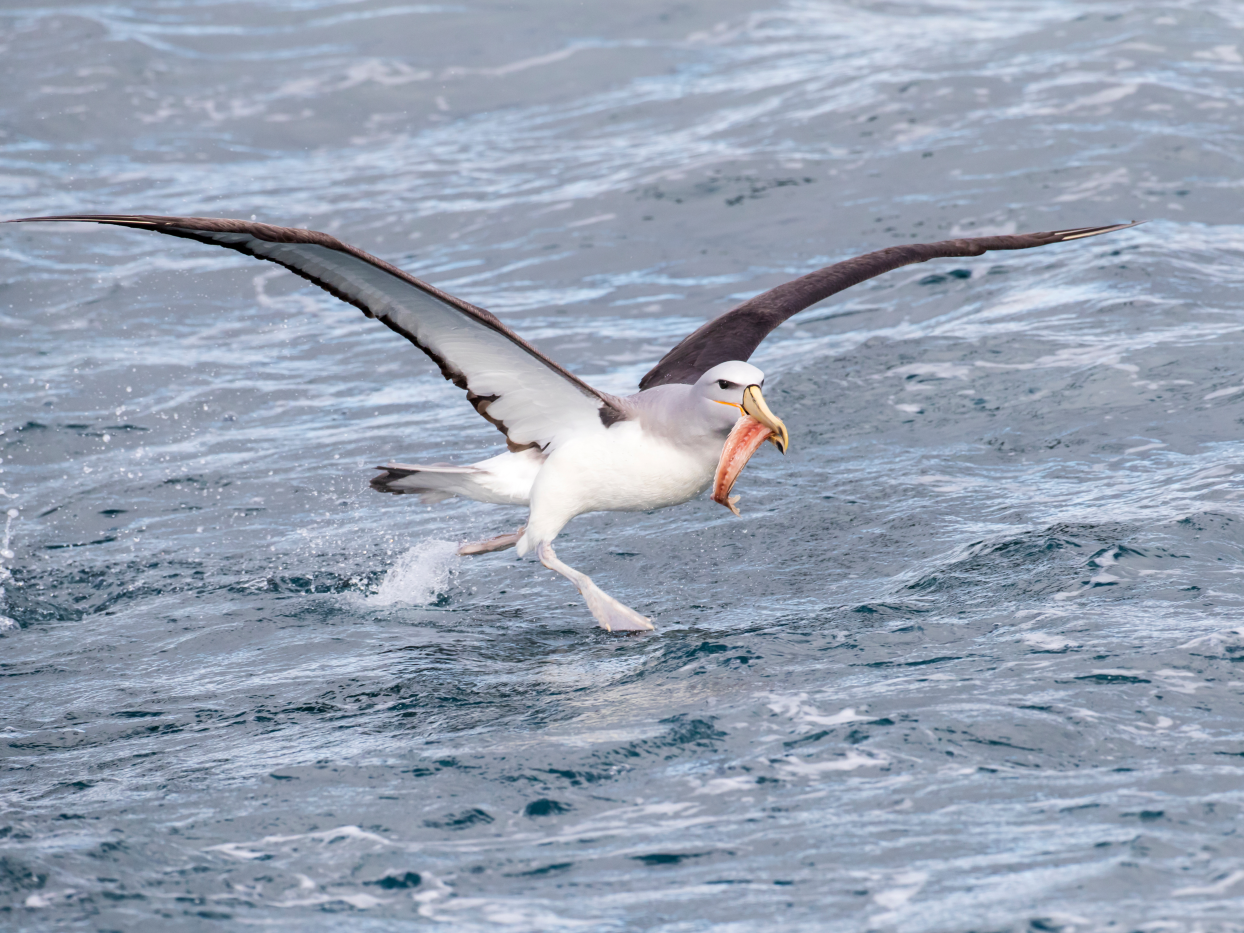
Salvin’s Albatross © Albatross Task Force
This year, Namibia attended the scientific meetings dealing with bycatch for the first time since 2022. They presented their improvements to bycatch forms and shared the challenges they have faced in collecting and reporting accurate bycatch data. In the presentation, Namibia highlighted their ongoing revisions to domestic legislation, to mandate the use of bycatch mitigation measures for protected species – and align their national policy with ICCAT regulations.
This project provides a blueprint for engagement with distant-water fleets and chartering nations. On the High Seas, which cover two-thirds of the world’s oceans and where 95% of fishing goes unobserved, better data collection and more transparent reporting are urgently needed. These vast waters beyond national jurisdiction are a major frontier in protecting ocean wanderers, and the project demonstrates a pathway to better reporting by vessels operating far beyond their home waters.